
Thrift stores are full of hidden gems, but they are also full of worn-out clothes that are not worth your money. Learning to spot quality in a thrift store is a skill that saves you from buying disappointments and helps you find pieces that will last for years. The difference between a bargain and a waste of money usually comes down to fabric, construction, and condition. With a trained eye, you can walk past the racks of fast fashion and go straight to the pieces that are worth taking home. It takes a little practice, but the rewards are real: beautiful clothes at a fraction of their original price.
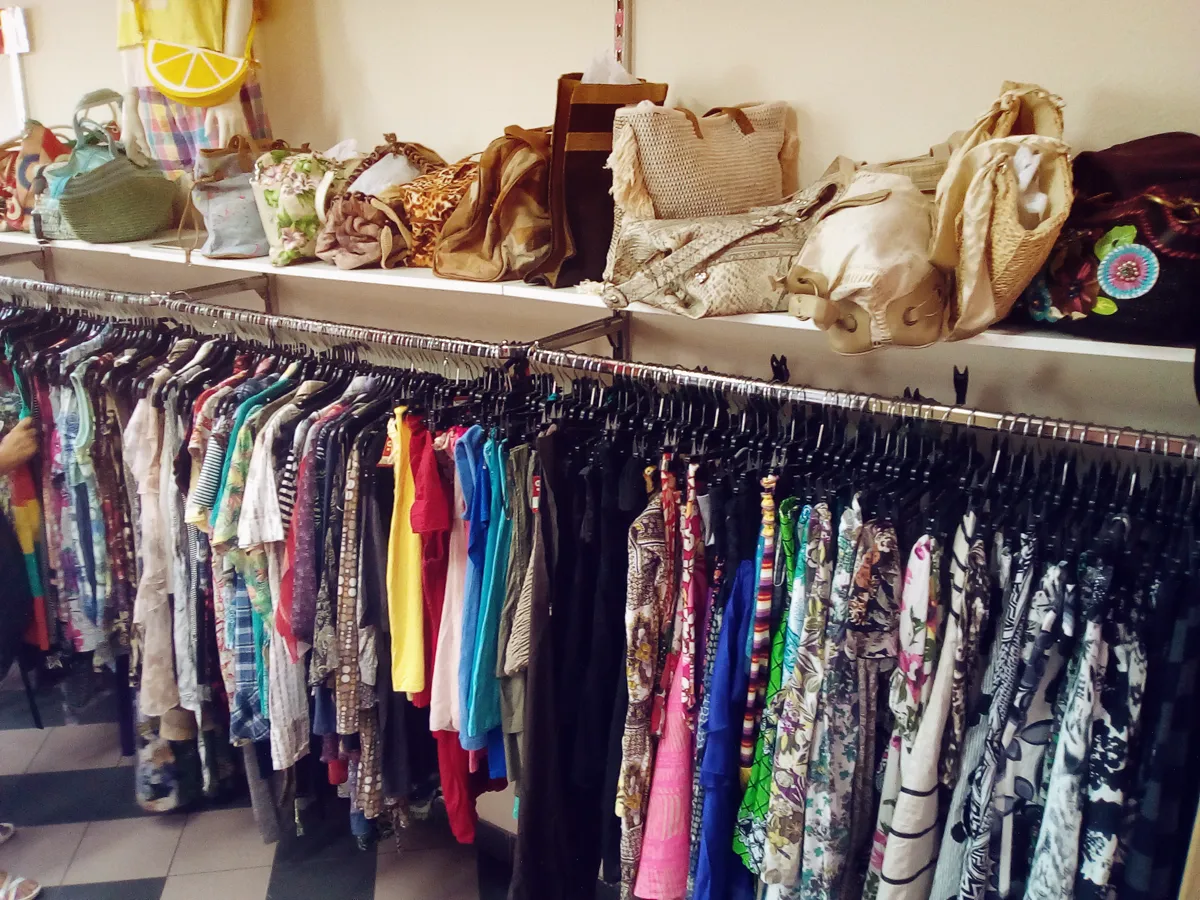
Start With the Fabric
Fabric is the fastest way to judge quality in a thrift store. Natural fibers like wool, cashmere, silk, cotton, and linen almost always beat synthetics for durability and appearance. Pick up the garment and feel it:
- Quality fabric has weight
- A smooth hand
- A clean drape
Hold it up to the light and check whether the weave is tight and even. A thin, papery fabric that you can see through is a sign of cheap construction, while a dense, even weave suggests the piece was made to last.
Check the fabric content on the label, but do not trust the label alone. Some older garments have missing or faded labels, and some modern pieces claim a natural fiber blend that is mostly polyester. The touch test is more reliable than the label. Wool feels springy and warm, silk feels cool and smooth, cotton feels soft and breathable, and linen has a distinctive textured feel. If a garment feels plasticky, staticky, or oddly slick, put it back, since it probably will not improve with wear.
Inspect the Construction
How a garment is put together tells you how long it will last. Look at the seams: they should be straight, even, and finished so the edges do not fray. Turn the garment inside out and check the stitching. Tight, even stitches with no loose threads are a sign of careful manufacturing, while wavy or uneven stitching suggests the piece was made quickly and cheaply. Check the buttons and zippers too. Real buttons made from horn, wood, or corozo feel solid, while thin plastic buttons feel light and cheap.
Lining is another quality signal. A lined jacket, skirt, or pair of trousers usually comes from a better maker, since lining adds cost and is skipped on cheap garments. The lining should be smooth, firmly attached, and free of tears. Check the hems as well: a hand-finished or neatly machine-finished hem is a good sign, while a raw or glued hem suggests the garment was made to a price. These details take seconds to check, and they separate the gems from the junk.
Check the Condition Carefully
Even a high-quality garment is not a bargain if it is damaged. Inspect every thrift store find in good light before you buy it. Look for stains, especially under the arms, around the collar, and on the front of the garment. Check for holes, thinning fabric, and worn spots at the elbows, knees, and seat. Smell the garment too, since musty or smoky odors can be difficult to remove, and some thrift stores do not allow returns.
Stretch the fabric gently in both directions and let it spring back. Quality fabric recovers its shape, while worn-out fabric stays stretched or baggy. Check the elastic in waistbands and cuffs, since dead elastic is expensive to replace. A garment with minor, fixable problems, like a loose button or a small stain, can still be a good buy if the price reflects it. A garment with structural damage, like a torn lining or a broken zipper, usually is not worth the repair cost.
Know the Brands, but Trust Your Eyes
Recognizing good brands helps, but it should not be your only guide. Many excellent garments come from brands you have never heard of, and many famous brands also make cheap lines. Learn the signs of quality construction, and use brand knowledge as a shortcut, not a rule. Check the country of manufacture and the care label, since garments made in countries with strong textile traditions often have better construction. But always let your hands and eyes make the final decision.
Set a personal standard before you shop. Decide what you are looking for, what condition you will accept, and how much you are willing to spend. It is easy to get excited by a low price and buy something you do not need, so ask yourself whether you would buy the garment at full price. If the answer is no, leave it on the rack. The best thrift store shoppers are patient and selective, and they know that the next great find is always one rack away.
Check the pockets and the waistband too, since these are the areas that wear out first. A pocket with a torn lining or a waistband with stretched elastic is a sign the garment has had a long life.
Spotting quality clothes in a thrift store comes down to three checks: fabric, construction, and condition. Feel the fabric, inspect the seams and lining, and look carefully for damage. With practice, these checks become second nature, and your thrift store finds will get better with every visit. Happy hunting.
This is only one piece of the Sustainable Fashion puzzle. The articles below fill in the rest.
Related Articles:
- Picking Timeless Sweaters: A Guide to Building a Quality Knitwear Wardrobe
- Best Outfits for Slow Travel Days: Comfort & Style Guide
- How to Style Wool Trousers for Everyday Casual Wear
Would you wear this look?
Tell us in the comments how you would style it your way.
Share this with a friend whose style you admire.