
An athletic build comes with a problem most jeans are not designed for:
- Bigger thighs and glutes
- A narrower waist
- Calves that fill out a straight leg
Standard jeans either squeeze the thighs, gap at the waist, or both. The fix is not to size up and hope for the best. It is to pick the right cut, the right fabric, and the right details for your proportions. With the right pair, jeans can show off an athletic build instead of fighting it. Here is how to find them.
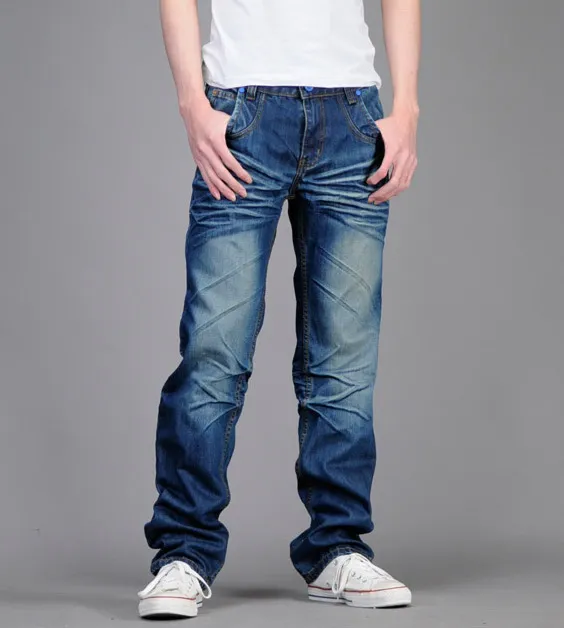
Start With the Right Cut
The cut matters more than the brand. Athletic and tapered cuts are made for muscular legs. They give room through the thigh and seat, then taper toward the ankle so the jeans do not look baggy. A straight cut with stretch can also work, but a rigid straight leg often fits the thigh and gaps at the waist. Slim and skinny cuts are the hardest for athletic builds, since they compress the thigh and restrict movement. If you love the look of a slim leg, choose a tapered athletic cut instead. It gives the same clean line below the knee without squeezing the thigh.
Rise matters too. A mid-rise or slightly higher rise sits at the natural waist and keeps the waistband from sliding down when you sit or bend. Low-rise jeans on an athletic build tend to gap at the back and need constant adjusting. A rise of ten to eleven inches works for most men with an athletic build. Try the jeans sitting down as well as standing, since a pair that fits standing can bind badly when you sit.
Pay attention to the seat. Jeans that are too tight across the seat will pull the pockets open and stress the seams. Jeans with a bit more room in the seat and a contoured waistband will sit smoothly without gaping. Some brands offer an athletic fit with a curved waistband that is higher in the back, which solves the gaping problem without a belt. If the waist still gaps, a tailor can take in the waistband for a small fee, which is cheaper than a closet full of almost-right jeans.
Choose Fabric With Stretch
Fabric is the second decision. Jeans with two to three percent elastane give enough to move with you, while still looking and feeling like denim. Pure rigid denim looks great but does not forgive a muscular thigh. On the other hand, jeans with too much stretch can bag out at the knees and seat after a few wears. Look for a cotton blend with a small amount of elastane and a medium weight, around twelve to fourteen ounces. That weight holds its shape while still moving with you.
Wash affects fit as well as color. Dark washes look sharper and tend to hold their shape better, since they have been processed less. Light washes are softer and more relaxed, but they can show wear faster in high-friction areas like the inner thigh. For a first pair, a dark indigo or a rinsed black in an athletic taper is the safest choice. It works with almost everything in your closet, and it dresses up more easily than a faded pair.
Check the Details
Small details make a big difference. Flat pockets that lie smooth against the hip look cleaner than bulky patch pockets. A tapered leg opening of fourteen to sixteen inches sits neatly over sneakers or boots without stacking. Avoid heavy distressing on the thigh, since rips and fading draw the eye to the widest part of the leg. Subtle fading is fine, but large light patches on the thigh will make the leg look bigger than it is.
Length matters as much as width. Jeans that pool at the ankle make the leg look shorter and the outfit look sloppy. Aim for a slight break or no break at all, and get the jeans hemmed if they are too long. A clean hem is the cheapest upgrade you can buy. If you wear boots, a slightly longer length works, but the jeans should still break once, not fold over themselves.
Try jeans with the shoes you will actually wear. A pair that looks perfect with sneakers can look wrong with boots, and vice versa. Bring your usual shoes when you shop, or try the jeans at home with both. The right jeans should feel comfortable the moment you put them on. If you have to convince yourself they fit, they do not fit, and no amount of breaking in will fix a bad cut.
Build a Small Rotation
Once you find a cut that works, buy it in two or three washes rather than searching for a new fit every time. A dark indigo, a black, and a medium blue cover nearly every casual situation. Rotate them so each pair rests between wears, which helps the fabric recover and extends the life of all three. Wash jeans as rarely as you can get away with, inside out in cold water, and hang them to dry. Less washing keeps the color and the stretch intact.
If you struggle to find a good fit off the rack, a tailor is worth the money. Taking in a waistband, tapering a leg, or hemming to length costs far less than a new pair, and it turns an almost-right pair into a perfect one. The best jeans for an athletic build are the ones that fit your actual body, not the ones that fit the average body the brand designed for.
There is always another angle. The guides below explore a few, starting with Men’s Business Casual: The Ultimate Outfit Guide.
Related Articles:
- Men’s Business Casual: The Ultimate Outfit Guide
- Casual Men Rainy Day Fashion Trends
- Casual Men Campus Looks: Easy, Trendy Outfits for College Life
Would you wear this look?
Tell us in the comments how you would style it your way.
Share this with a friend whose style you admire.